08/10/2024
A journey through time: a fascinating history in Lod and the surrounding area
Lod - culture and history come together
Lod, an ancient and magical city located in the center of the country, holds a rich and varied history spanning thousands of years. The city served as an important cultural, religious and commercial center throughout history, and served as the capital of the Kingdom of Judah during the Second Temple period. You should really go on a time journey into the past of Lod, and get to know the historical sites and the fascinating museums that are there, and it is recommended to consider renting a car in Israel and get to the city to learn about the many cultures that have left their mark on it.

Credit: Zalmanson Zeller, from the pikiwiki site
Khan al Hilo - a look into the past
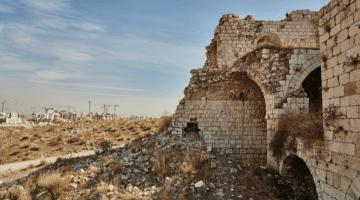
In the heart of the old city of Lod, stands Khan Hilo, one of the most magnificent and great khans left in the Land of Israel. The Khan, which was active from the Mamluk days until the end of the British Mandate, stands as living testimony to rich historical periods and the city's vibrant past. The building of the Khan is impressive in its beauty and strength. Its shape is square, with a spacious courtyard in the center. The entrance to the khan is through a wide and high gate located in the southern wall. The gate is decorated with two arches, in the center of which is a decorated headstone. Above the upper arch you can still see the hook that held the oil lamp that illuminated the entrance in the hours of darkness. The lower arch is decorated with a "chess" pattern, and on either side of it stand two wide columns that serve as benches. Today, it is still an important historical milestone in the city of Lod. You can tour it and experience the size and glory of the ancient trading posts, and imagine the trading and traffic life that existed here for centuries.
Lod mosaic - an amazing find
During road widening works on Halutz Street in Lod, in 1996, the highlight of the archaeological finds in the city was uncovered: one of the most magnificent mosaic floors discovered in Israel. This discovery aroused great interest among the general public, received extensive coverage in the media and became one of the most important and fascinating heritage sites in the city. The magnificent mosaic carpet, dating from the end of the third century and the beginning of the fourth century AD, covers an area of 180 square meters (10 m x 18 m) and is exceptionally well preserved. It was part of a magnificent Roman villa of one of the richest men of Lod (Diopolis) during the Roman period The later The mosaic floor in Lod is one of the few that survived in Israel from this period, and it is also the most complete and well-preserved so far.
Church of St. George - a saint in Lod
In the center of the old city of Lod, stands the Church of St. George, next to the famous Al-Omari Mosque. The church, located on the site of the grave of St. George according to the Christian tradition, is a center of attraction for many Christian pilgrims and an important spiritual center for the Greek Orthodox community in Israel. Throughout history, the church has gone through many incarnations. It was originally built in the Byzantine period, but was later destroyed by the Muslim rule. The Crusaders rebuilt it, but it too was destroyed again. In 1870, the church was built in its current form, as a Greek Orthodox church. St. George's Church is a magnificent example of classical ecclesiastical architecture. Its facade is decorated with crosses and statues, and its windows are decorated with colored glass. The interior of the church is decorated with impressive wall paintings depicting scenes from the New Testament and the life of St. George. St. George's Church is not only a place of worship, but also an important historical and cultural symbol for the city of Lod. It stands as a living testimony to the ancient Christian faith in the city.

Credit: Israel Parker, from the pikiwiki site
The House of Arches - a magnificent building
In the center of ancient Lod stands the House of Arches, an impressive stone building that is a living testimony to different historical periods. The building, which is divided into three columns of arches, was built in stages over hundreds of years, while combining diverse architectural styles. The impressive arches, built of local limestone, are a central feature of the structure. They are divided into three groups, indicating three main construction periods: The arches in the northern wing: particularly monumental, both in their height and width, both in the size of the art and in the quality of the construction. The building stone and the architectural style suggest that in the past they supported a magnificent building of importance and impressive volume. The arches in the central wing: smaller than the northern arches, they reflect a simpler architectural style. They may have been built in the Mamluk period. The arches in the south wing: even simpler, they characterize the Ottoman style of construction. Over the years, the Arch House was used for a variety of purposes. During the Crusader period, the building may have been used as a palace or as an important public building. In the Mamluk period, the building may have been used as a workshop or warehouse, and in the Ottoman period and during the British Mandate, it was used as a textile house. Today, the House of Arches is an important historical site that attracts many visitors and tourists.
Jindas Bridge - an impressive testimony to another era
The Jindas Bridge, located at the northern exit from the city of Lod, between Route 40 and the railroad leading to the city from the north, is an impressive testimony to the Mamluk period and its advanced construction technology. The bridge, also named after an Arab village called Jindas that was on the site of the current settlement of Ginton, was built in 1273 by the famous Mamluk sultan Baybers. Through the bridge they passed from Egypt to Syria, and it causes the splitting of the stream of Nahal Elon, which may be, in the winter months, very strong. Jindas Bridge is not only an important historical structure, but also a beautiful tourist site. The view from the bridge to Nahal Ilon and the green surroundings, and the peaceful atmosphere make it a perfect place for a walk and rest.