01/10/2024
Glossary of terms for electric vehicles
The world of electric vehicles contains many new concepts that we did not know before, and for those who are not familiar, they may sound complicated and sometimes even confusing. Whether you are about to buy an electric vehicle, have already purchased one, or just want to stay updated, we have gathered all the important terms you should know.
An electric vehicle (BEV) is a vehicle powered by electricity stored in batteries located at the bottom of the vehicle. The batteries transfer electric current to the electric motor and from there to the vehicle's wheels.
The electric vehicle battery (lithium-ion) is the most expensive and important component in an electric vehicle. It is located at the bottom of the electric vehicle and is used to store energy for the purpose of driving the vehicle. The battery can be compared to the familiar fuel tank, which helps determine the vehicle's driving range.
Battery capacity refers to the amount of energy that can be stored in the battery. The capacity is measured in kilowatt-hours (kWh) and affects the driving range of the electric vehicle. The higher the battery capacity, the greater the driving range, and vice versa.
A kilowatt (kW) is a unit of measurement for electrical power. This data is important because it defines the charging rate of the electric vehicle.
A kilowatt-hour (kWh) is a unit that represents the amount of electrical energy a battery can supply for one hour.
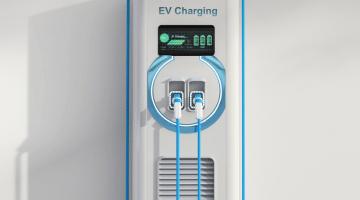
A charging station is a device that provides electrical energy to charge an electric vehicle using a charging cable.
A charging cable is intended for connecting the electric vehicle to a home or public charging station.
Regular charging (AC) is low-power charging (7.4kW-22kW). It can be done using a home charging station or a public charging station, which accelerates the charging rate to 6-12 hours of charging.
Fast charging (DC) is high-power charging (50kW and above). It can be done using a public charging station, allowing about 80% of the battery capacity to be filled within about half an hour.
Super/ultra-fast charging (DC) is very high-power charging (100kW and above). The charging time is supposed to be even shorter than the fast charging station.
A Supercharger is a fast charging station of the DC type, providing a significantly higher charging speed compared to most public charging stations. The station is unique and available only for Tesla vehicles.
Electricity consumption is a unit that expresses the vehicle's energy consumption as published by the vehicle manufacturer. This data is equivalent to the fuel consumption data in a combustion engine vehicle and is usually measured in watt-hours per kilometer. The lower the electricity consumption data, the greater the driving range.
Regenerative braking is an energy recovery method that helps slow down an electric vehicle. Under certain conditions, it is possible to drive with one pedal while using the brakes minimally, thus extending the driving range.
A Type 1 connector is a single-phase connector with a maximum power of 7.4kWh suitable for regular charging (AC) and is less common in Israel. Most public charging stations support such a connection.
A Type 2 connector can work with both single-phase and three-phase systems and has a maximum single-phase power of 22kWh. The connector is suitable for regular charging (AC) and is the most common connector in Israel.
A CCS2 connector has a maximum power of 350kW suitable for fast charging (DC) and is the most common connector in most new models, including Tesla vehicles.
A CHAdeMO connector has a maximum power of 400kW suitable for fast charging (DC) and is less common in Israel. The connector is mainly common in Japanese vehicles.
NEDC / WLTP standards are European methods for calculating energy consumption and air pollution.
The NEDC standard is an older standard that has been replaced by the WLTP standard, which is considered more reliable. The driving range of an electric car is measured under these two standards, according to the battery volume and engine efficiency.